
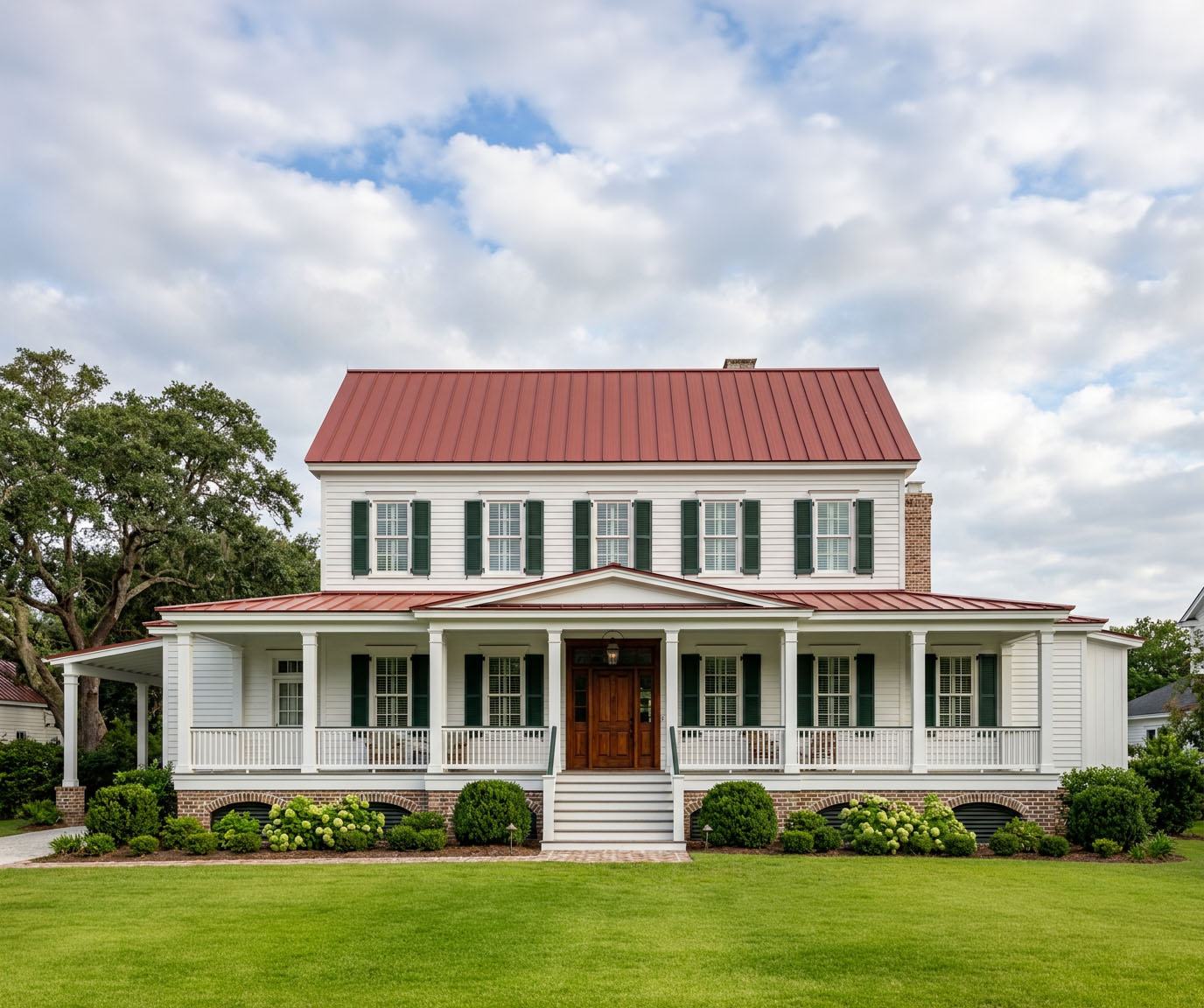
Everyone loves shutters, but they aren’t always used the way we’d like to see them. Today, architect Bill Harris shares a few of our do’s and don’ts when it comes to placing shutters on your home.
Why
Traditionally, shutters served two primary purposes: weather protection and privacy. Today, they are more often about style, nostalgia, and adding a thoughtful pop of color to a home. While shutters are no longer the primary line of defense against the elements, there is still value in understanding their original intent.
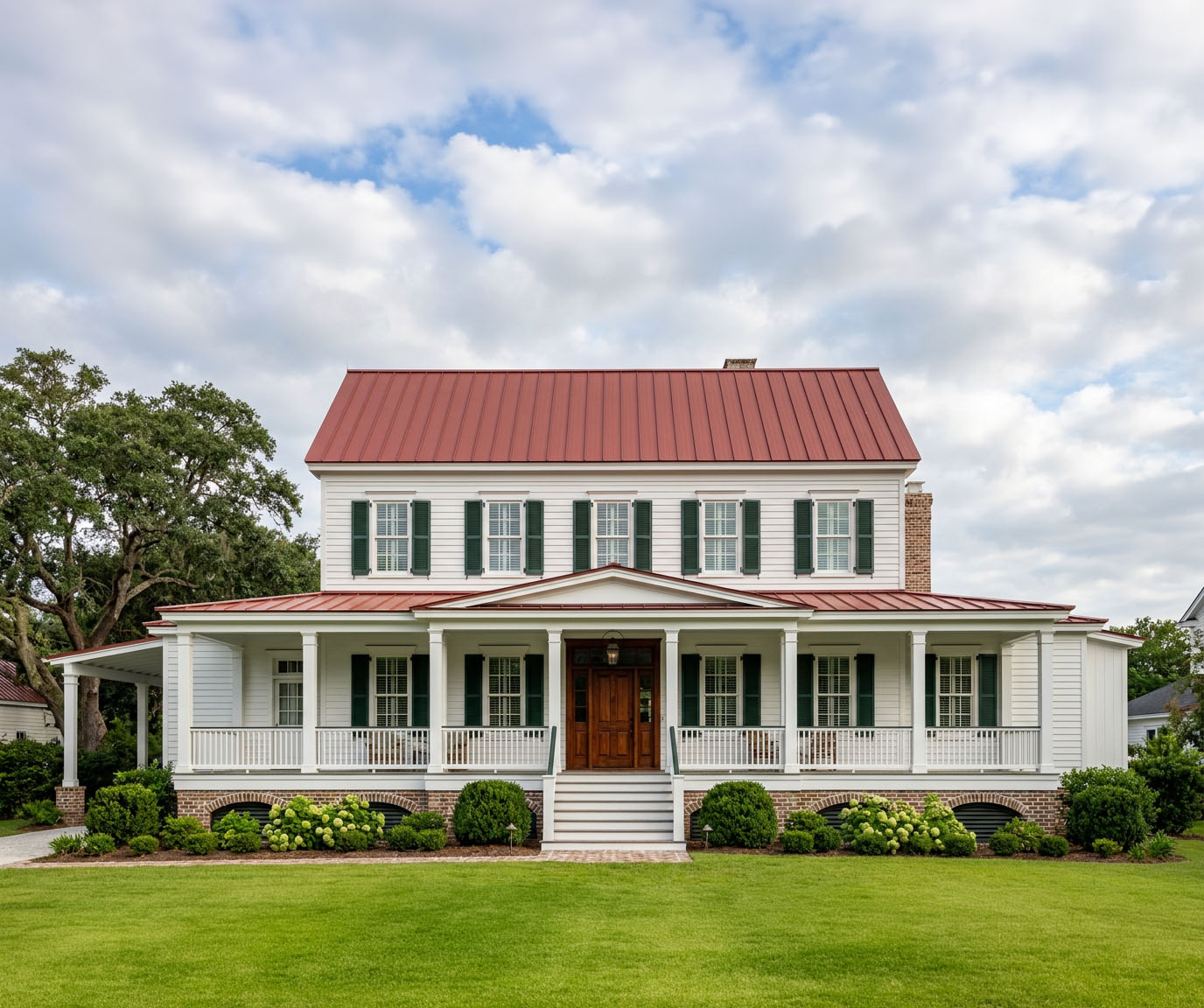
If protection were still the primary goal, more consideration would be given to window type and placement. We appreciate authenticity, but we also balance that with modern building practices and client preferences. With impact-rated windows and other advancements, shutters have shifted from a “need” to more of a “want.”
Where
Clients often ask where shutters should be used on a home. If they are intended for true protection, then window placement must be designed with that in mind. For decorative use, we typically begin with the front, or public-facing, sides of the home.
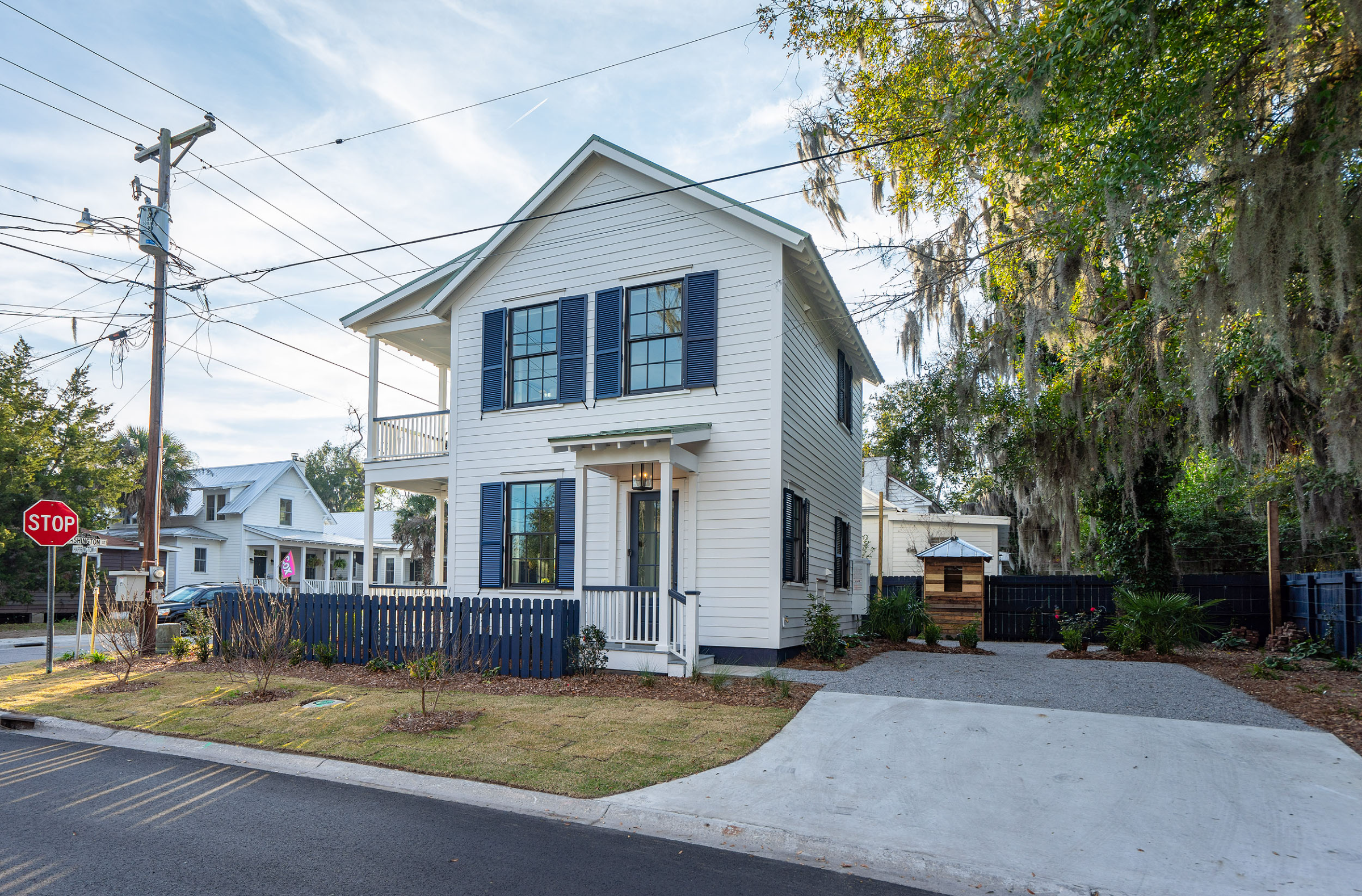
From there, we may consider a side elevation, especially on a corner lot. In some cases, we limit shutter placement due to cost or window configuration.
When
We are asked this often. Some window configurations lend themselves better to shutters than others. A single window is ideal. A double window can work well but may require bi-fold shutters. When you get into three or more windows grouped together, it becomes much more difficult to execute well.
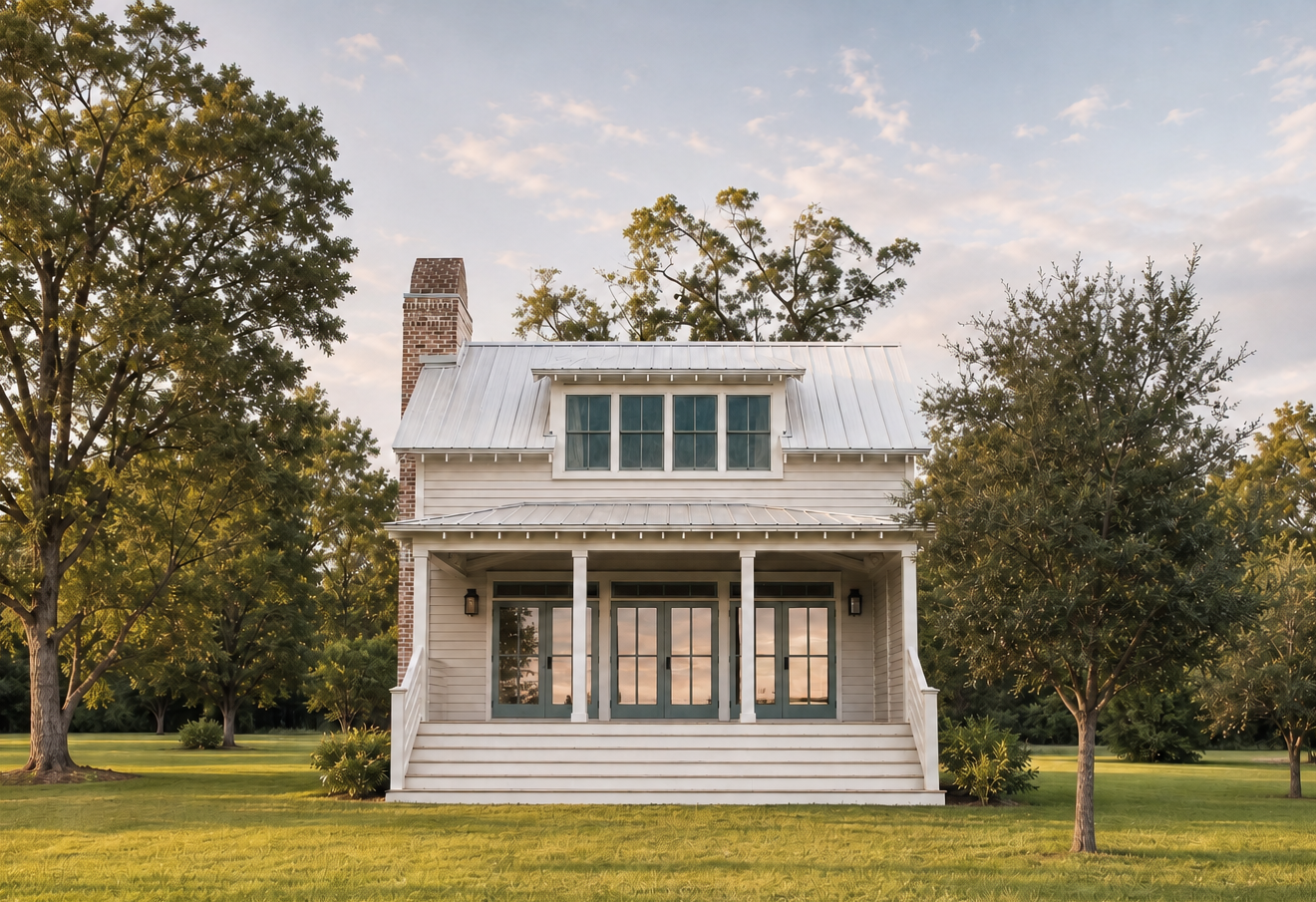
At that point, shutters become oversized, multi-folding, and heavy. In most cases, we avoid shutters on triple windows or larger groupings.
Style
There are many styles to choose from, with the most common being louvered, paneled, and board-and-batten. Within those categories, there is a wide range of design possibilities.
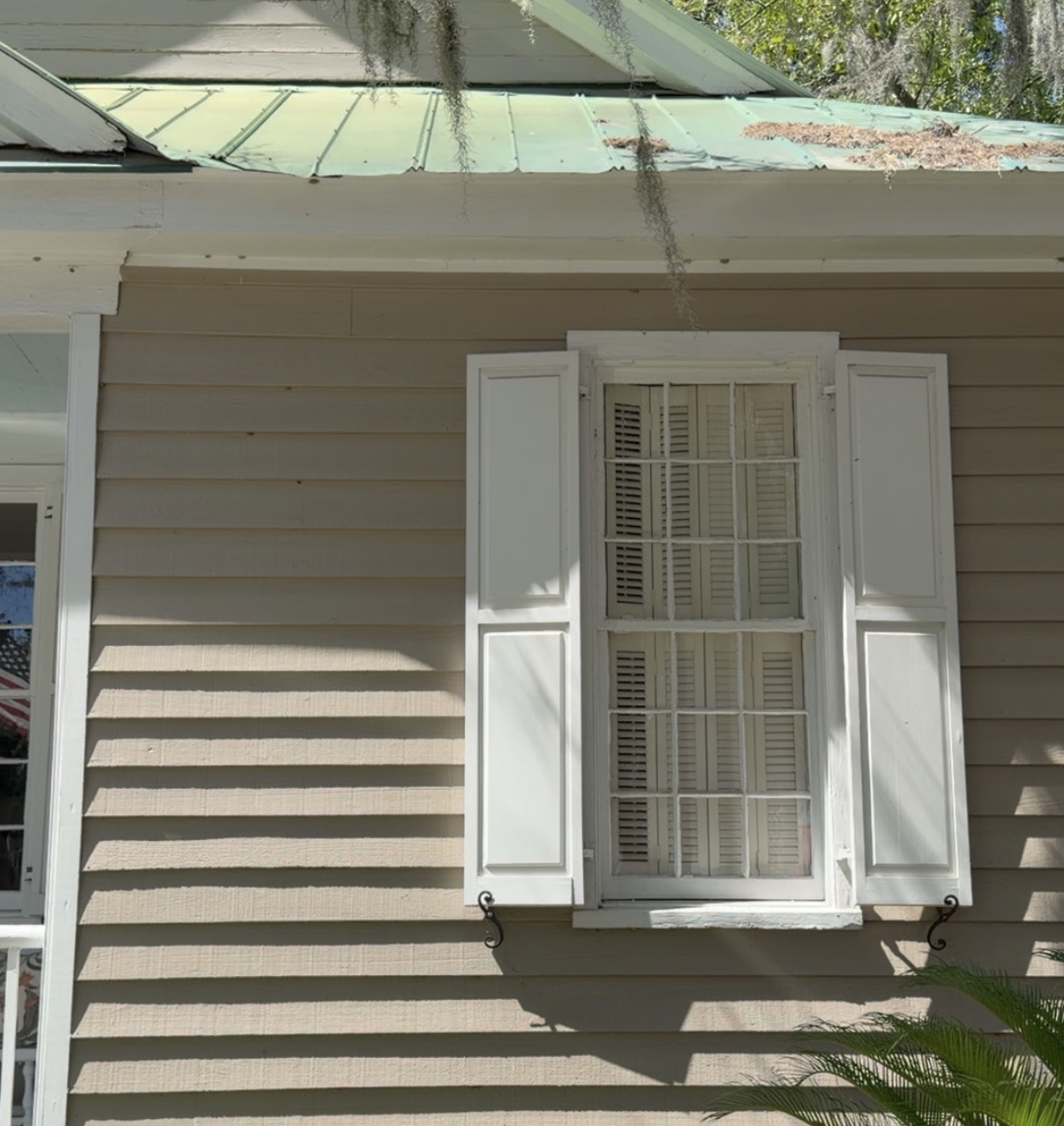
Options include traditional two-panel shutters, more rustic farmhouse or mountain-inspired designs, Bahamian (top-hinged) shutters, bi-fold configurations, or even custom cutouts. We have designed shutters with seahorse motifs, as well as classic palm and crescent moon patterns.
Type
A shutter, or pair of shutters, should always be operable. In our drawings, we specify that shutters are fully functional and include the appropriate hardware.
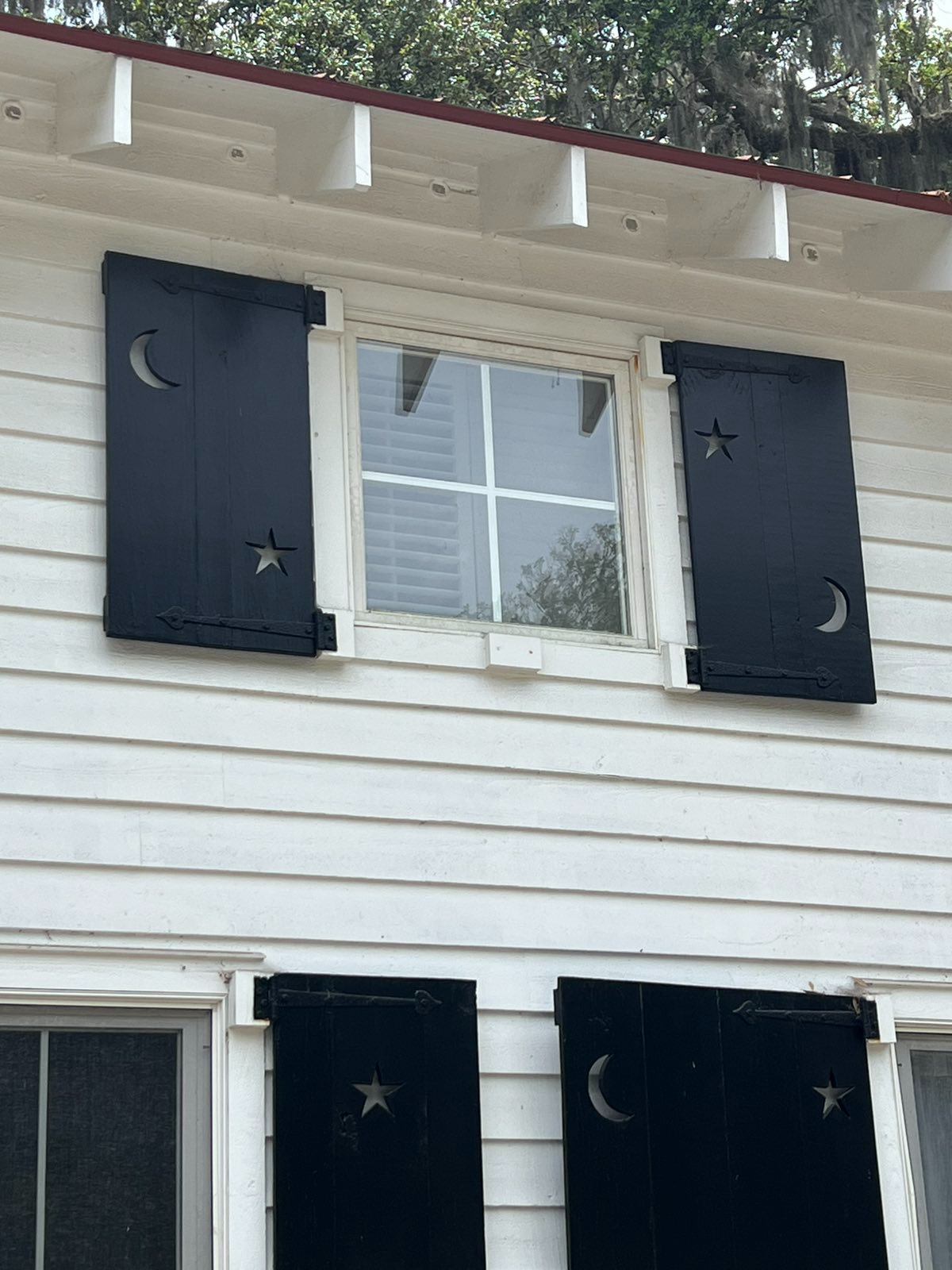
Regardless of style, color, or climate, we do not attach shutters permanently to the wall.
Size and Operation
This is one of the most important considerations. Shutters should be sized to properly cover the window. Seeing a pair of 12-inch shutters on a 36-inch window is a common mistake—and a painful one.
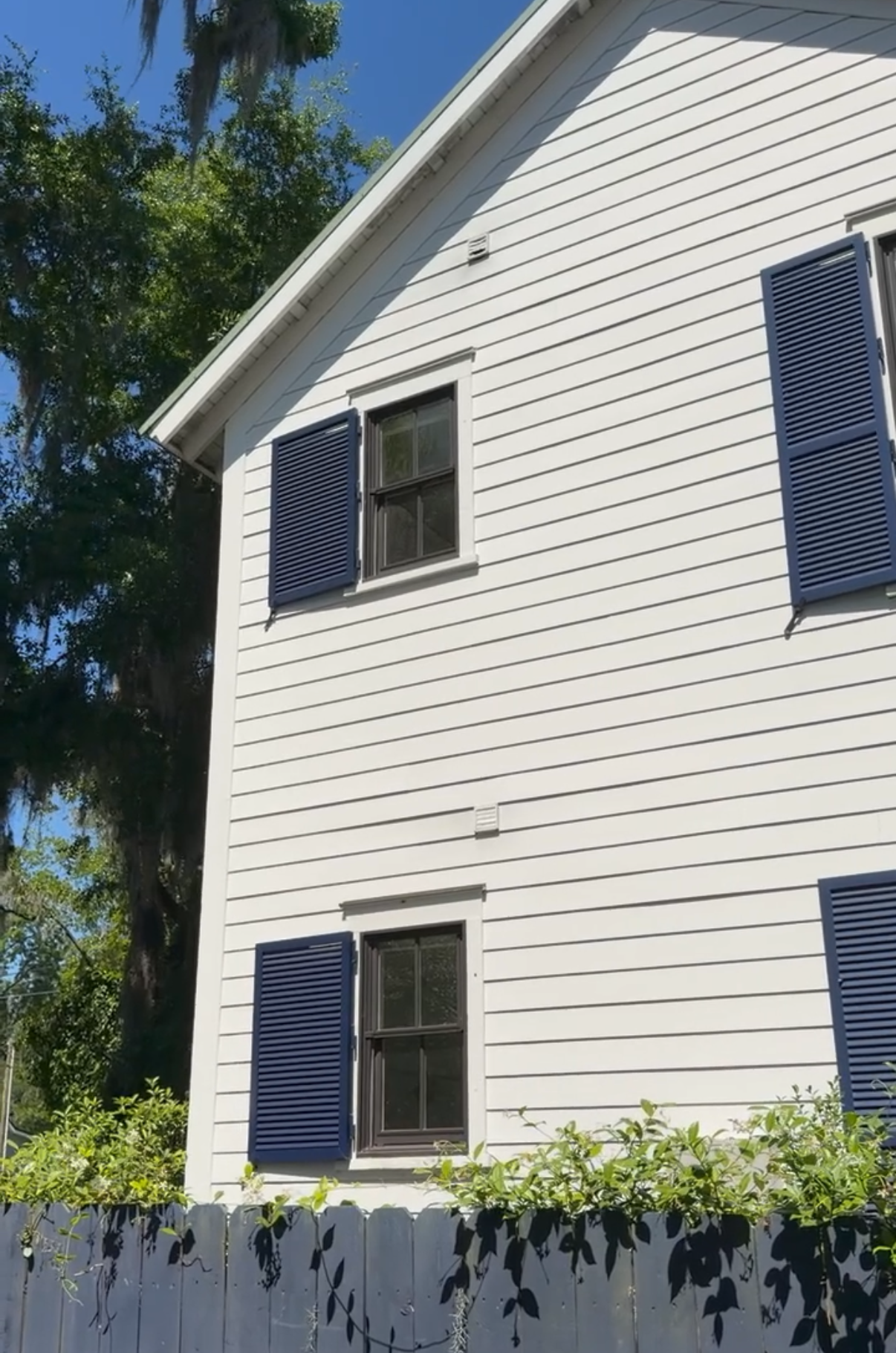
Authenticity means the shutters must be capable of doing their job, even if they are primarily decorative. A quick drive through almost any neighborhood will reveal how often this is overlooked.
Installation
Proper installation matters. Hinges should typically be mounted to the window trim, not the siding, so the shutters can operate correctly in both open and closed positions.
Investing in quality, heavier-duty hardware is worthwhile, and there are many options ranging from rustic to more refined decorative styles.
Shutter Dogs
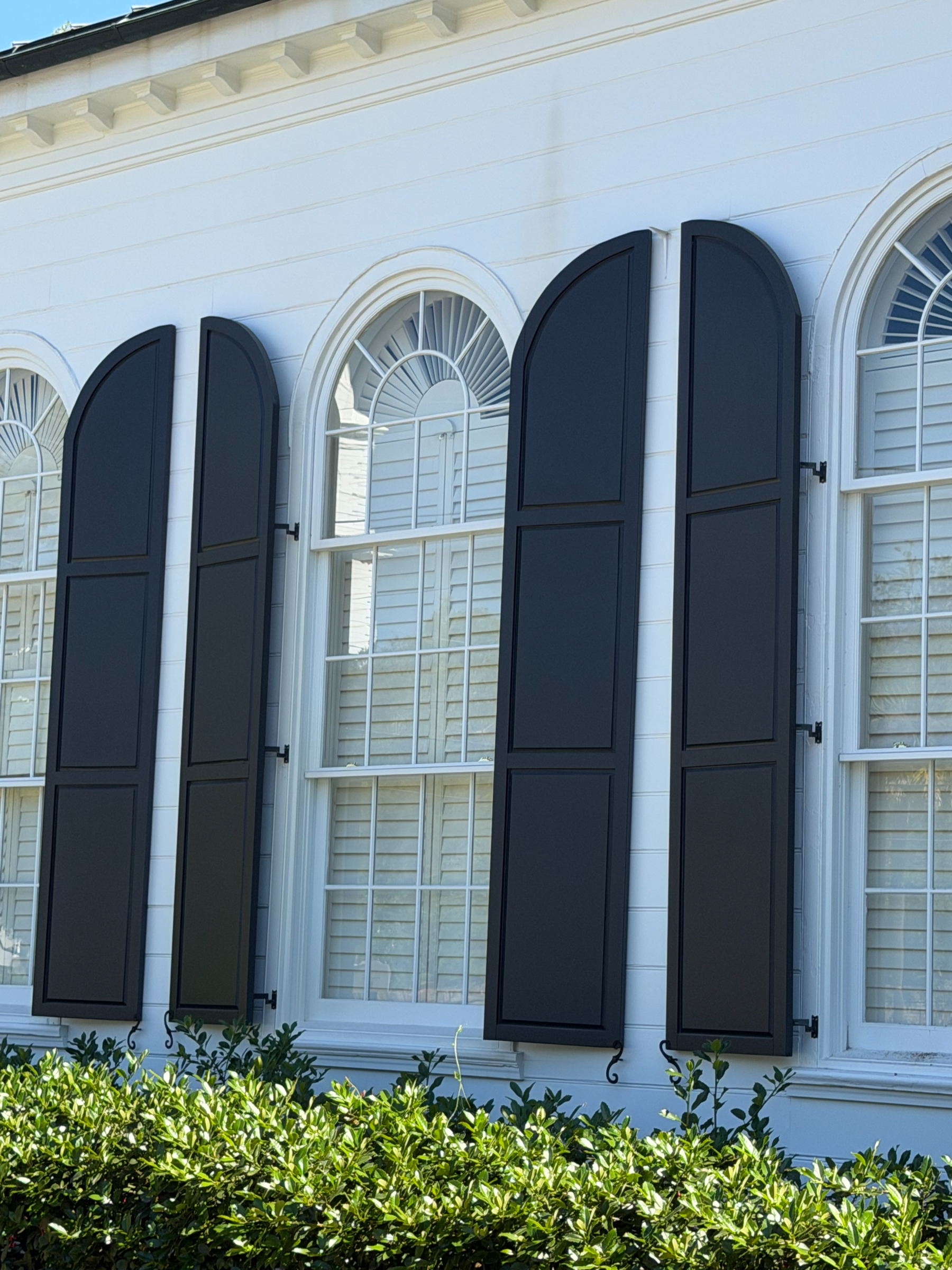
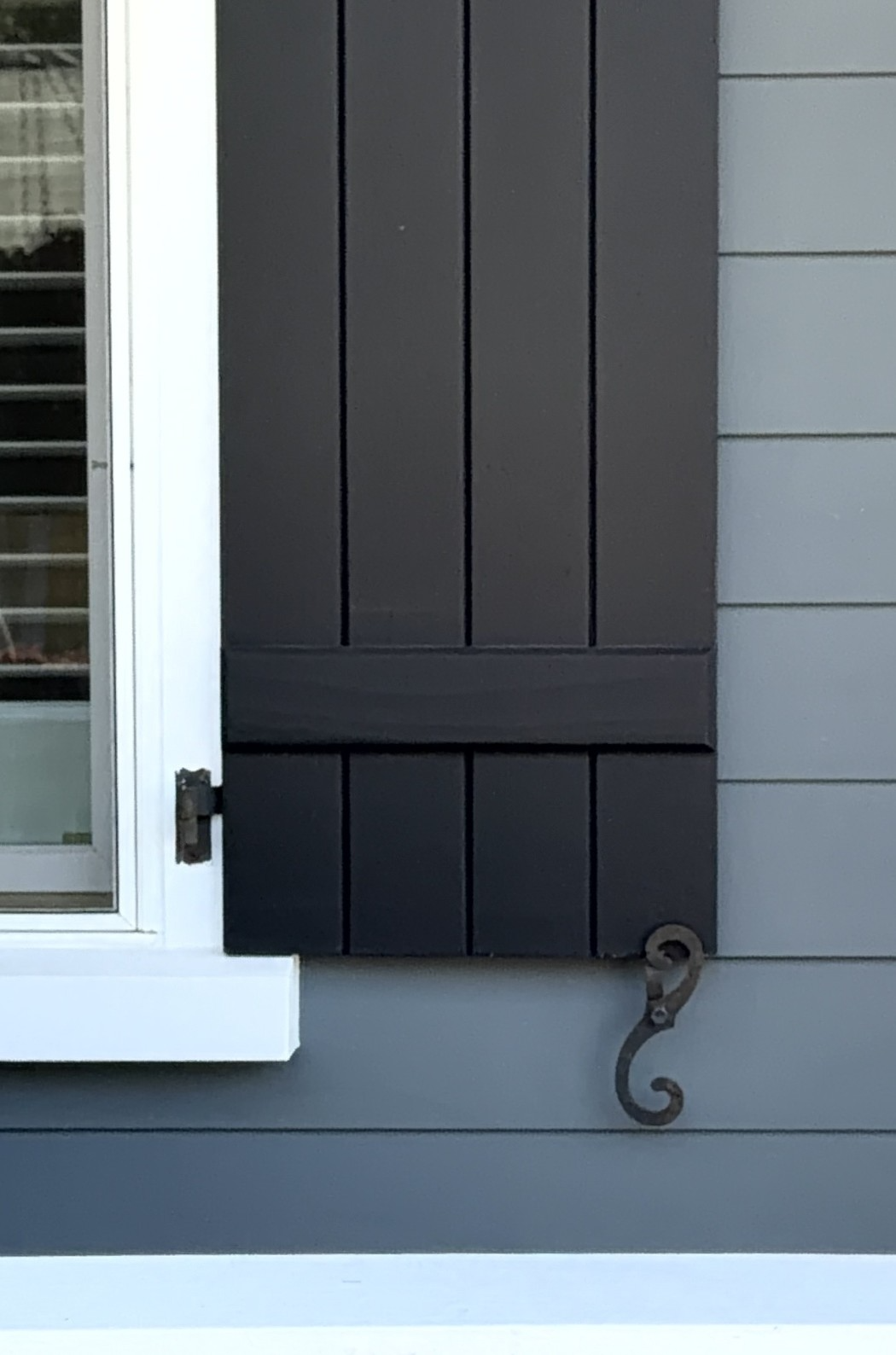
The classic “S” shape is a staple, but there are many variations. One of our favorites is a clamshell-shaped holdback. With so many available designs, it is often possible to find—or even custom create—something unique.
Shutter dogs are especially common in the Lowcountry, but when designing in other regions, we look to local precedent. In some Caribbean applications, a simple metal rod spanning the shutters and window is used, reflecting a more utilitarian and functional approach. This is the beauty of regional design.
Materials
Historically, shutters were made of wood. When maintained properly and consistently, they can last a long time. Today, most clients prefer lower-maintenance options that allow them to enjoy their homes rather than maintain them.
In protected areas, such as under a porch, wood remains a great option. However, synthetic materials like PVC or fiber cement are increasingly common. We support these choices when the proportions and appearance remain true to their traditional wood counterparts.
The Rules
As we mentioned, we are not strict rule followers. Good design often requires knowing when to follow tradition and when to thoughtfully depart from it. Restraint is key, even for us.
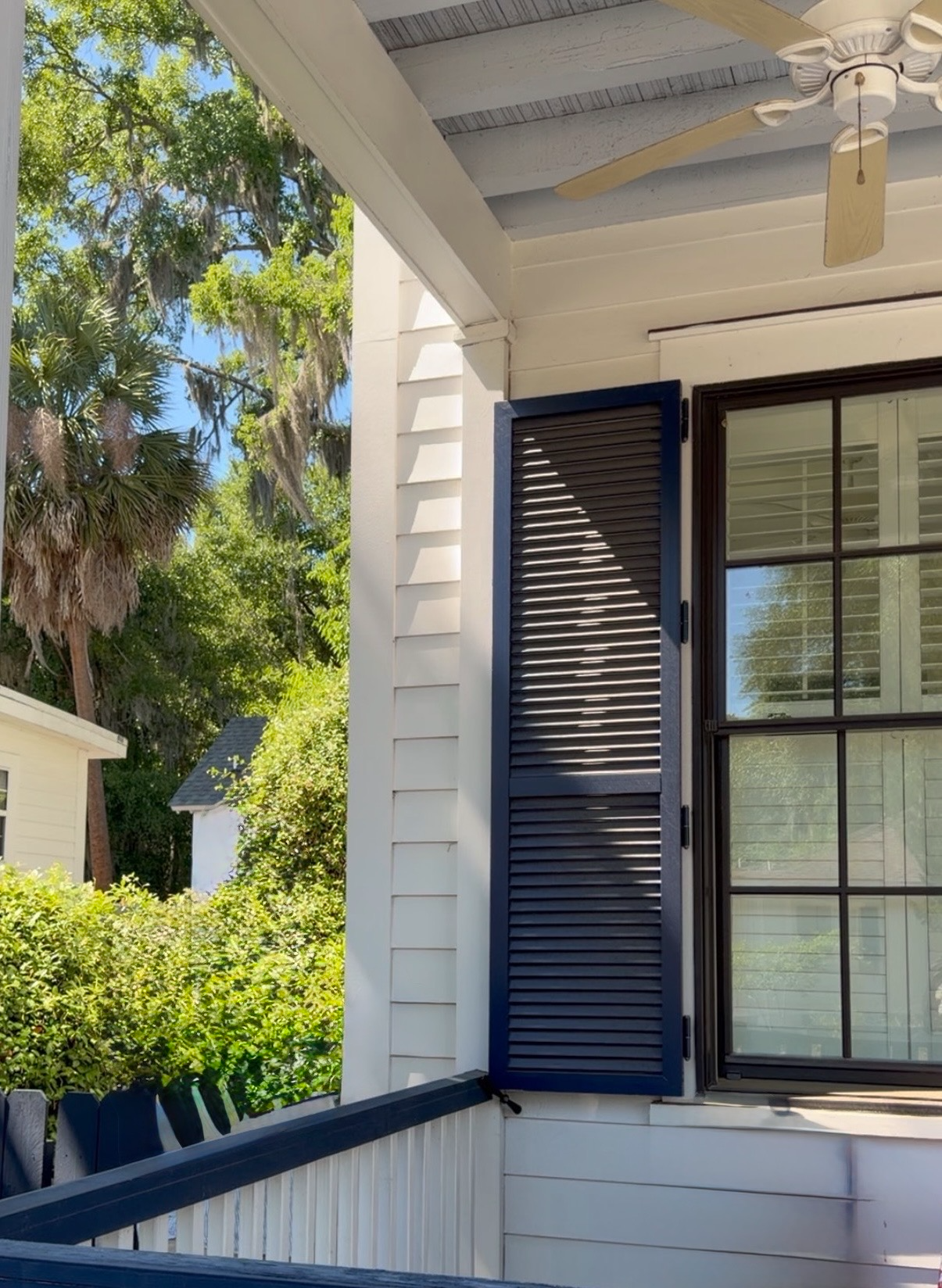
For example, following a precedent found in Charleston, South Carolina, we may specify louvered shutters on upper levels and paneled shutters below. Historically, this addressed ventilation upstairs (before air conditioning) and privacy at the street level. While this approach is sometimes questioned, it is always intentional—and often an opportunity to educate.
In other cases, a shutter may open into an obstruction such as a chimney, column, or even another shutter. We occasionally incorporate these historically accurate conditions on purpose, even though they fall outside typical expectations.
This may seem like a lot of thought for something as simple as shutters, but it reflects the level of care that goes into all of our design decisions. Even the smallest details matter. We are always balancing tradition, current trends, materials, cost, and, ultimately, what makes good design.
As you go about your day, you may start to notice shutters everywhere—and quickly recognize what works and what does not. We would love to hear what you’re seeing and whether it stands out to you as much as it does to us.
Thanks for reading, and feel free to reach out if we can help.
Bill Harris
Principal and Architect
Ready To Build Your Dream Home?
Browse our collection of over 4,000 professionally designed house plans. Find the perfect design for your family.
Explore House Plans